
QUES . Describe the chief characteristics of Mauryan art.
HINTS:
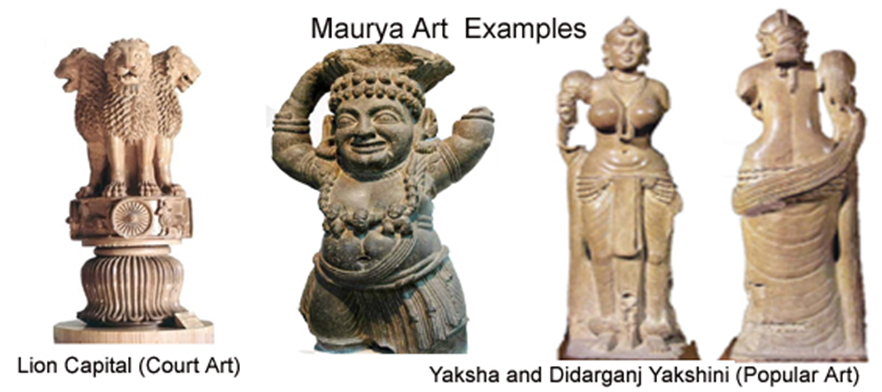
The art of the Mauryan Empire, which existed in ancient India between 321 and 185 BCE, is notable for its highly developed stone carving, metal working, and architectural techniques.
Must read: MAGADHA – THE MOST POWERFUL MAHAJANAPADA
Chief characteristics of Mauryan art
Some of the chief characteristics of Mauryan art include:
Realism:
The Mauryan artists were skilled at depicting realistic figures and objects in their artwork. They used detailed and accurate representations of animals, plants, and people in their sculptures, which were highly valued for their naturalistic qualities.
Must read: Why is the Maurya rule important in the history of India?
Use of stone and metal:
The Mauryan artists were proficient in working with a variety of materials, including stone and metal. They created intricate sculptures and reliefs using mainly hard stones such as granite, sandstone and limestone. They also worked with metal, mainly bronze, to create statues and other decorative objects. However the architecture was mostly made up of wood.
Architectural achievements:
The Mauryan Empire was notable for its architectural achievements, particularly its rock-cut architecture. The most famous examples of this are the rock-cut temples and monasteries at Barabar and Nagarjuni hills, near Gaya, Bihar, that are considered to be the oldest surviving rock-cut caves in India. Stupas were built to protect the relics of the Buddha at a number of places.
Must read: “Dhamma ” of Ashoka
Ornate and elaborate details:
Mauryan art is known for its ornate and elaborate details. The sculptures and reliefs from this period are characterized by their intricate designs and decorations, which often include geometric patterns and intricate carvings of animals and human figures. Motifs like Elephant, Bull, and Lion were made to crown the pillars.
Use of symbolism:
Mauryan art often includes symbols and motifs that were believed to have religious or spiritual significance. For example, the depiction of the lion, a symbol of power and strength, is a common motif in Mauryan art.
Examples of Mauryan Art
Pillars: Delhi, Allahabad, Rummindei, Saranath, and Sanchi.
Stupa: Sanchi and Bairat.
Caves: Barabar hills, Pitalkhora, and Kondane caves.
Overall, the art of the Mauryan Empire is notable for its realism, use of stone and metal, architectural achievements, ornate and elaborate details, and use of symbolism. The Mauryan Empire was a period of great artistic achievement in India, and the art produced during this time continues to be admired and studied by scholars and art lovers alike.
External link: https://ncert.nic.in/textbook/pdf/kefa103.pdf
