
QUES . Examine the linkages between the nineteenth century’s ‘Indian Renaissance’ and the emergence of national identity. UPSC 2019 GS MAINS PAPER 1. 150 words. 10 Marks
HINTS:
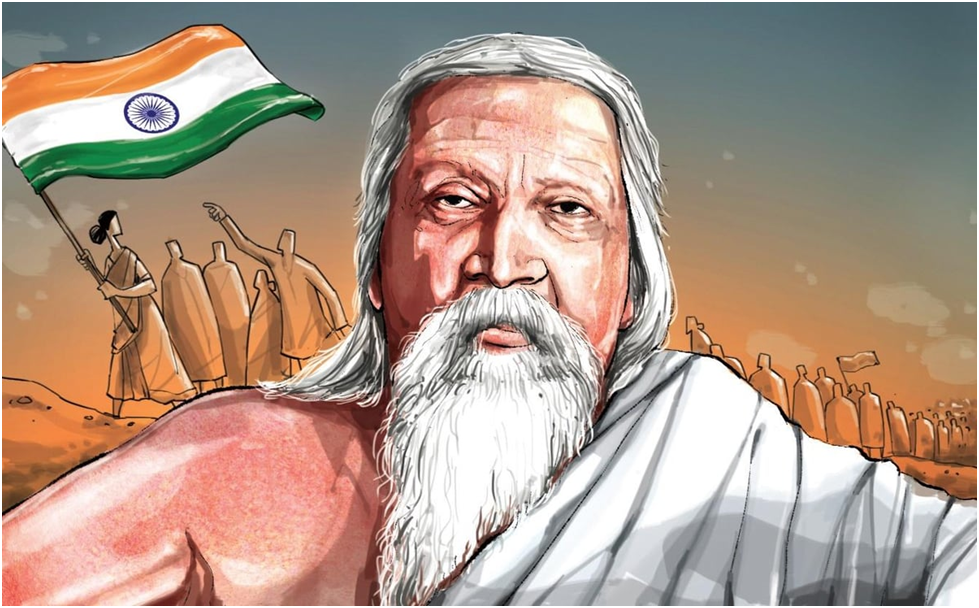
Indian Renaissance refers to social and religious reforms that began to manifest itself from the early decades of the 19th century. Various factors like religious and social ills, depressing position of women, segregation and hierarchy in caste system and awareness among the enlightened Indians led to renaissance.
National identity is related to the sense of belongingness shared by Individuals to a Nation, represented as cohesion of tradition, culture, language and Politics.
Linkages between the nineteenth century’s ‘Indian Renaissance’ and the emergence of national identity
֍ The Renaissance process focused on worldly existence and issues of salvation/other worldliness. This was needed at that time to take Indians away from the grips of ill social practices and to further undertake social actions, in direction of social integrity.
֍ The introduction of Western education and English led to the rediscovery of ancient Indian texts, history, and philosophies. This created pride in Indian cultural heritage and shaped a distinct Indian identity.
֍ Indian Renaissance also saw the rise of Indian press and media, which played a major role in the emergence of national identity. Indian newspapers and journals helped to spread ideas of nationalism and to build a sense of community among Indians.
֍ The movements carried a new humanitarian morality, which included the notion that humanity can progress, with a special emphasis on individual rights. These humanistic ideals made people realize the equal worth of all individuals.
֍ Indian Renaissance also saw the rise of Indian literature, which helped to promote a sense of Indian identity. Indian poets and writers, such as Rabindranath Tagore, Bankim Chandra Chatterjee,etc. wrote works that celebrated Indian culture and history, and helped to foster a sense of national pride among Indians.
֍ The movements took into consideration evolution of an alternative cultural-ideological system and the regeneration of traditional institutions, to arouse a sense of common belongingness in the flourishing past.
֍ The Indian Renaissance saw the rise of several Indian leaders who sought to challenge British colonialism and promote a sense of Indian nationalism. These leaders, such as Raja Rammohan Roy, Bankim Chandra Chatterjee and Swami Vivekananda, worked to promote Indian culture, education, and language, and their ideas helped to shape the national identity of India.
֍ Reformers reinterpreted Hinduism, emphasizing Vedantic monotheism to promote harmony. This nurtured religious unity and nationalist feelings.
֍ The later socio-religious movements penetrated the lower strata of society to revolutionalise and reconstruct social sphere; This was in the way of an effort to bridge the gap between different communities to fight for a common cause
֍ Renaissance also strived to bring together Indians to fight against common enemy, thereby imparting National Identity to them . This was seen in efforts of ‘The Servants of India Society’, by Gopal Krishna Gokhale which aimed to train national missionaries for the service of India
But these movements often weakened the national identity:
֍ The emphasis on religious reforms sometimes resulted in divisions within and between religious communities, which could weaken the sense of a unified national identity. For example, Arya Samaj movement of Shuddhi Karan seeded communalism in society.
֍ These movements were not mass based. The Indian Renaissance was largely driven by the educated and urban elite, often disconnected from the realities of rural India. This created a gap between the educated elite and the masses, hindering the formation of a unified national identity.
֍ The adoption of Western values and ideals by some Renaissance leaders led to a sense of cultural disconnection for those who felt that their traditional beliefs and practices were being undermined.
֍ They were mostly centered in Bengal and other urban centers only, which led to an overemphasis on the cultural and intellectual contributions of these regions. This potentially marginalized the identities and contributions of other regions within the broader national context.
However, inspite of the above limitations we can say that, Indian Renaissance helped in developing the identity of secularism, justice and human values which became the hall mark of modern India. And it was the pan India movement led by Mahatma Gandhi which gave impetus to these ideas at bigger level.
External link: https://en.wikipedia.org/wiki/Bengal_Renaissance
