
QUES . What do you mean by Indian renaissance of 19th century ? Discuss the causes of Indian renaissance.
HINTS:
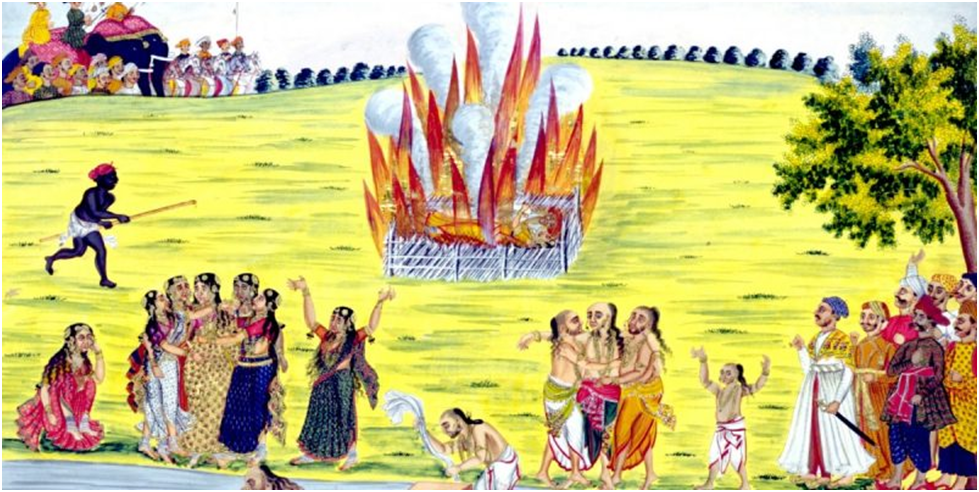
The Indian Renaissance of the 19th century was a period of intellectual, cultural, and social awakening in India. It marked a revival of Indian traditions, a questioning of social norms, and the emergence of new ideas that played a crucial role in shaping India’s modern identity. There are also Linkages between 19th centuries ‘Indian Renaissance’ and the emergence of national identity
The causes of the Indian Renaissance were multifaceted and can be understood as follows:
Impact of British Colonialism:
British colonial rule in India led to a significant disruption of traditional Indian society. Economic exploitation, cultural subjugation, and political dominance by the British prompted Indians to reevaluate their own culture and heritage.
Influence of Western Education:
The British introduced modern education in India, including English-language education, which exposed Indians to Western ideas, philosophies, and scientific advancements. This education created a class of English-educated Indians who began to engage with Western thought.
Social and Religious Reform Movements:
Influential reformers and leaders emerged, advocating for social and religious reforms. Prominent figures like Raja Ram Mohan Roy, Ishwar Chandra Vidyasagar, and Swami Vivekananda played pivotal roles in addressing social issues such as sati, child marriage, caste discrimination, and the status of women.
Rediscovery of Indian Heritage:
Scholars and thinkers of the time undertook the task of rediscovering India’s ancient heritage. They translated and interpreted ancient texts, which contributed to a renewed sense of pride in India’s cultural and philosophical achievements.
Interaction with Western Thought:
Indian intellectuals engaged with Western philosophical and political ideas, such as liberalism, nationalism, and democracy. This interaction led to the development of a modern Indian political thought and a desire for self-governance.
Religious and Spiritual Revival:
The 19th century saw a revival of Indian spirituality and religious thought. Figures like Ramakrishna Paramahamsa and Swami Vivekananda emphasized the importance of spirituality and the unity of all religions.
Influence of Enlightenment Ideals:
Enlightenment ideals of reason, liberty, and human rights had an impact on Indian intellectuals. They began to question traditional hierarchies and advocate for individual rights and social justice.
Socio-Economic Changes:
Industrialization and urbanization brought about changes in Indian society. People from various regions and communities came into contact with each other, leading to the exchange of ideas and the breaking down of parochial barriers.
Influence of Global Events:
Global events, such as the American and French Revolutions and the Enlightenment, influenced Indian thinkers and fueled aspirations for freedom and equality.
Role of Indian Press and Literature:
The growth of the Indian press and the emergence of literary figures like Bankim Chandra Chattopadhyay contributed to the spread of new ideas and discussions on social and political issues.
The Indian Renaissance of the 19th century was a complex and multifaceted phenomenon that marked a critical turning point in India’s history. It laid the foundation for subsequent movements for independence, social reform, and cultural revival and contributed to the emergence of modern India as a nation with a rich and diverse cultural heritage.
External link: https://en.wikipedia.org/wiki/Bengal_Renaissance
