
QUES . Describe how short-term variations in temperature are related to the processes of receiving energy from the sun to the Earth’s surface and dissipating it to the atmosphere.
HINTS:
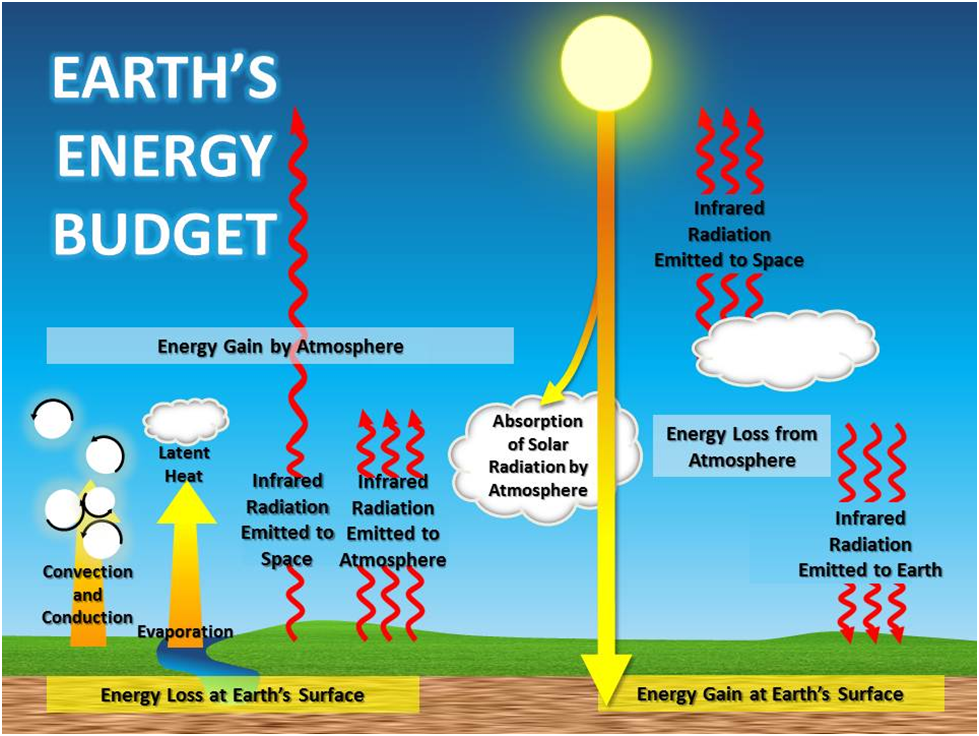
Short-term variations in temperature are closely related to the processes of receiving energy from the sun to the Earth’s surface and dissipating it to the atmosphere. The Earth’s surface absorbs energy from the sun, primarily in the form of visible light and infrared radiation. This energy is then transferred to the atmosphere through several processes, including conduction, convection, and radiation.
During the day, the sun’s energy heats the Earth’s surface, causing it to warm up. As the surface warms, it heats the air above it through conduction. This process is responsible for the warm temperatures during the day.
At night, the Earth’s surface cools down, and the air near the surface also cools. As the air cools, it becomes denser and sinks, and the warmer air above it rises. This process is known as convection and is responsible for cooler temperatures at night.
Radiation is another important process that plays a role in short-term temperature variations. The Earth’s surface emits energy in the form of infrared radiation, which is absorbed by greenhouse gases in the atmosphere, such as carbon dioxide and water vapor. These greenhouse gases trap some of the infrared radiation and re-emit it back to the surface, keeping the Earth’s surface warmer than it would be otherwise.
Short-term variations in temperature can also be influenced by other factors, such as clouds, which can reflect some of the sun’s energy back to space, and humidity, which affects how much water vapor is in the air and can impact the amount of heat that is trapped in the atmosphere.
In summary, short-term variations in temperature are influenced by the processes of receiving energy from the sun to the Earth’s surface and dissipating it to the atmosphere through conduction, convection, and radiation. These processes, along with other factors such as clouds and humidity, determine the temperature variations we experience on a daily basis.
