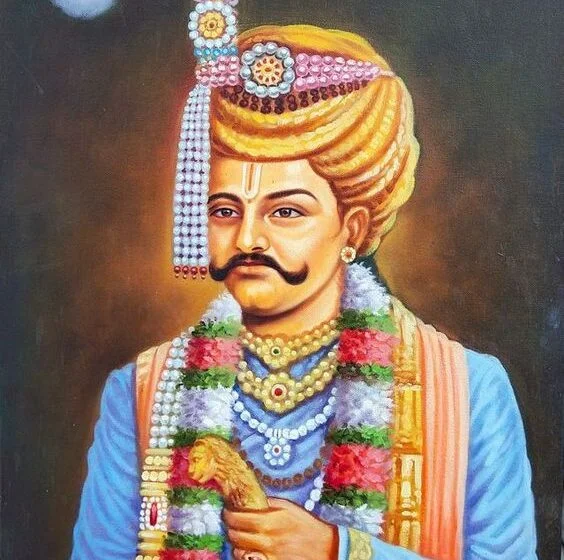
The greatest of the Vijayanagar rulers, Krishna Deva Raya (1509 – 1530) belonged to the Tuluva dynasty.
He possessed great military ability. His imposing personality was accompanied by high intellectual quality.
Wars and Conquests
His first task was to check the invading Bahmani forces. By that time the Bahmani kingdom was replaced
by Deccan Sultanates. The Muslim armies were decisively defeated in the battle of Diwani by Krishna Deva Raya.
Then he invaded Raichur Doab which had resulted in the confrontation with the Sultan of Bijapur, Ismail Adil Shah. But, Krishna Deva Raya defeated him and captured the city of Raichur in 1520. From there he marched on Bidar and captured it.
Krishna Deva Raya’s Orissa campaign was also successful. He defeated the Gajapathi ruler Prataparudra and conquered the whole of Telungana.
He maintained friendly relations with the Portuguese. Albuquerque sent his ambassadors to Krishna Deva
Raya.
Revenue administration
He abolished obnoxious taxes such as the marriage fee.
To increase revenues, he brought new lands under cultivation, ordering the deforestation of some areas and undertook a large-scale work to obtain water for irrigation around Vijayanagara.
The ruler collected variety of taxes ranging on the nature of lands. Private owners also paid industries taxes.
Merchant guilds were empowered to levy taxes on goods manufactured, sold or transported
Literature and art
Cultural and artistic achievements of the Vijayanagar empire reached its zenith during the rule of Krishna Deva Raya.
He was a great patron of literature and art and he was known as Andhra Bhoja.
Eight eminent scholars known as Ashtadiggajas were at his royal court. Allasani Peddanna was the greatest and he was called Andhrakavita Pitamaga. His important works include Manucharitam and Harikathasaram.
Pingali Suranna and Tenali Ramakrishna were other important scholars.
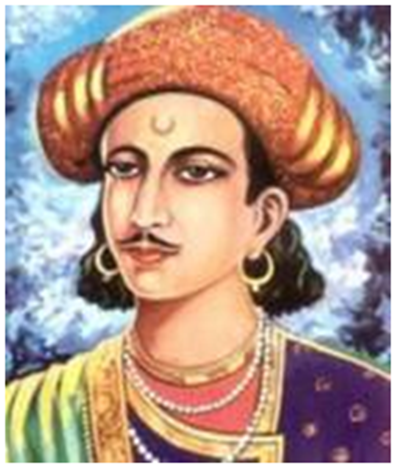
Krishna Deva Raya himself authored a Telugu work, Amukthamalyadha and Sanskrit works, Jambavati Kalyanam and Ushaparinayam.
He is known to have patronised poets and issued inscriptions in languages as varied as Kannada, Sanskrit, Telugu and Tamil.
Krishna Deva Raya himself was a polyglot, fluent in Kannada Sanskrit, Telugu and Tamil .
Krishnadevaraya patronized literature in various languages. The rule of Krishna Deva Raya was an age of prolific literature in many languages, although it is particularly known as a golden age of Telugu literature.
Religion and Culture
Though a Vaishnavaite, he respected all religions.
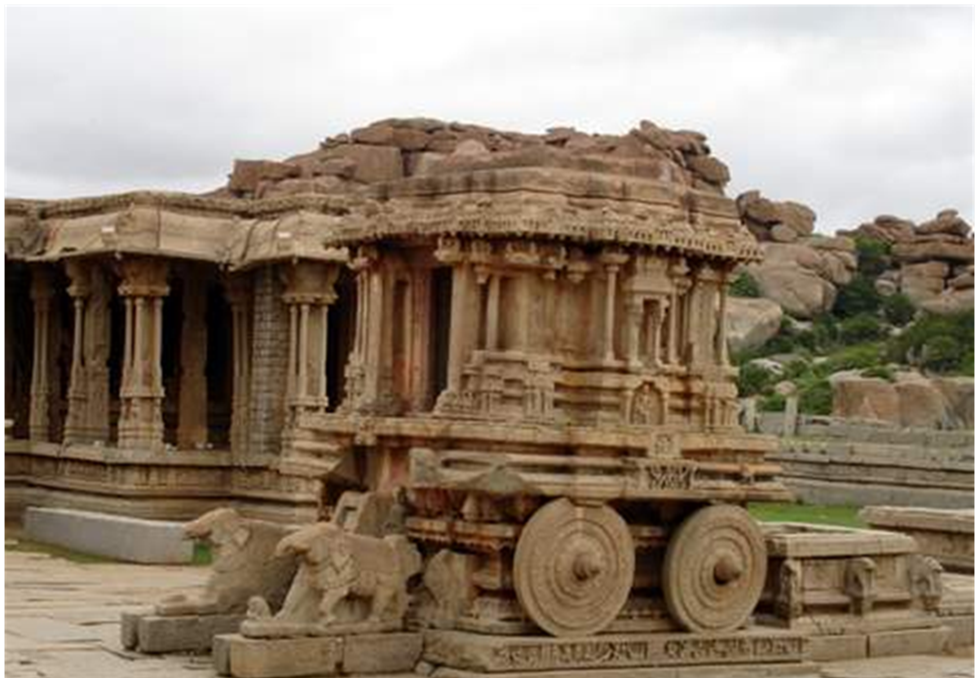
He repaired most of the temples of south India. He also built the famous Vittalaswamy and Hazara Ramaswamy temples at Vijayanagar.
He also built a new city called Nagalapuram in memory of his queen Nagaladevi. Besides, he built a large number of Rayagopurams.
Must read: Vijayanagar Empire – Political History
External link: https://en.wikipedia.org/wiki/Krishnadevaraya
PRACTICE QUESTIONS
MAINS
QUES . Krishnadeva Raya, the King of Vijayanagar, was not only an accomplished scholar himself but was also a great patron of learning and literature. Discuss. (150 Words) UPSC 2016 GS MAINS PAPER 1
PRELIMS
QUES . Regarding the taxation system of Krishna Deva, the ruler of Vijayanagar, consider the following statements: UPSC 2016
1. The tax rate on land was fixed depending on the quality of the land.
2. Private owners of workshops paid an industries tax.
Which of the statements given above is/are correct?
(a) 1 only
(b) 2 only
(c) Both 1 and 2
(d) Neither 1 nor 2
(c) ■ The ruler collected variety of taxes ranging on the nature of lands. ■ Private owners also paid industries taxes. ■ Merchant guilds were empowered to levy taxes on goods manufactured, sold or transported
