
QUES . “The Indian legislature under the Act of 1919 was only a non-sovereign law-making body and was powerless before the executive in all spheres of governmental activity”. Comment.
HINTS:
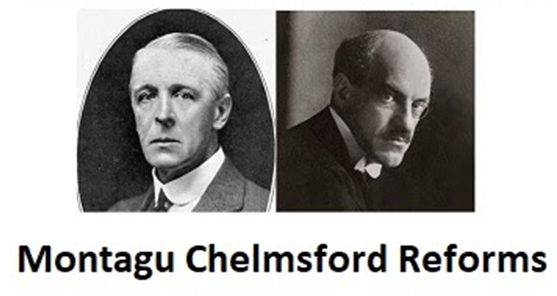
Must read: Government of India Act, 1919
Under the 1919 Act, the Indian Legislative Council at the Centre was replaced by a bicameral system consisting of a Council of State (Upper House) and a Legislative Assembly (Lower House). Each house was to have a majority of members who were directly elected. So, direct election was introduced, though the franchise was much restricted being based on qualifications of property, tax, or education.
Must read: Government of India Act of 1858 – Act for the Good Government of India
The Central Legislature, though more representative than the previous legislative councils and endowed, for the first time, with power to vote supplies, had no power to replace the government, and even its powers in the field of legislation and financial control were limited and subject to the overriding powers of the governor general.
Although the legislators could ask questions and also vote on a part of the budget , only 25% of the budget was subject to vote and rest was non-votable. Also the governor general could disallow any question, adjournment motion or debate in the house.
Must read: Charter Act of 1853 – the last of the series of Charter Acts
Besides his existing power to veto any bill passed by the legislature or to reserve the same for the signification of the British monarch’s pleasure, the governor general was given the power to secure the enactment of laws which he considered essential for the safety, tranquility, or interests of British India, or any part of British India. Governor general could also enact a bill without the legislature’s consent.
Must read: Cripps Mission
Though Indian leaders for the first time got some administrative experience in a constitutional set-up under this act, there was no fulfilment of the demand for responsible government. The Indian National Congress rejected the Act, however some leaders such as Annie Besant, G. S. Khaparde, Bipin Chandra Pal, Surendranath Banerjee, and Tej Bahadur Sapru accepted the Act and were ready to cooperate with the government.
External link: https://en.wikipedia.org/wiki/Government_of_India_Act_1919
