
Buddhism offers four primary sites of pilgrimage: Lumbini , Bodh Gaya , Sarnath , and Kushinagar . All of these sites are located in India except Lumbini, which is located in southern Nepal.
Lumbini – birthplace of the Buddha
Lumbini is a Buddhist pilgrimage site in the Rupandehi District of Lumbini Province in Nepal. It is the place where, according to Buddhist tradition, queen Maya gave birth to Siddhartha Gautama at around 566 BCE.
Lumbini has a number of old temples, including the Mayadevi Temple.
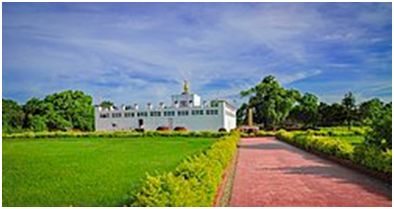
Lumbini was made a World Heritage Site by UNESCO in 1997.
Must refer: Prominent Buddhist centres of ancient India
Bodh Gaya – the site where the Buddha attained enlightenment
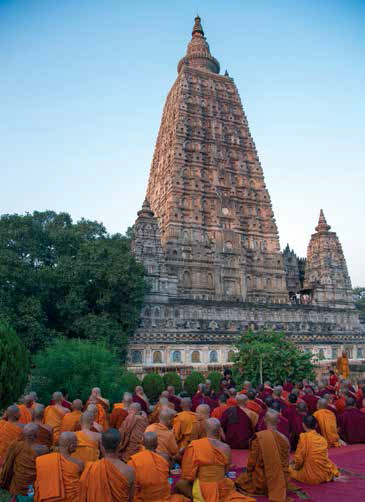
Bodhgaya is the holiest of holy places for the Buddhists.
Here is where Siddhartha Gautama, did severe penance for 49 days, under the hallowed Bodhi Tree, to gain enlightenment, and become the Perfect One. From the Boddhisatva, he became the Buddha.
Mahabodhi Temple is a World Heritage site.
The Mahabodhi Temple was first built by the Emperor Ashoka in the 3rd century BC.
The Bodhi Tree is the most important attraction in the Mahabodhi temple complex.
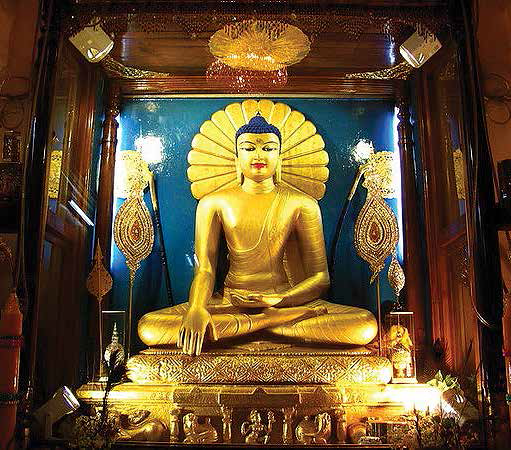
At the centre of the temple, is a grand and gorgeous gilded statue of Buddha, 8 metres tall, with the right hand touching the earth, in the Bhumisparsha Mudra.
Many festivals are celebrated in Bodhgaya, the most important being ‘Buddha Poornima’. This is the important day when the Buddha was born, gained ‘Enlightenment, and went through ‘Mahaparinirvana’- miraculously, all on the same date. This is in the month of Vaisakha, in April-May.
Sarnath – the location of the Buddha’s first sermon
Sarnath is a very important Buddhist spot, because this is where the Buddha gave his first sermon, called the Dharmachakraparavartana or the Wheel of Law, five weeks after his enlightenment.
It was here that he propagated the important tenets of his Dharma – the Four Noble Truths, the Eight-Fold path, and the Middle Way.
It was here also that he founded his Sangha (Council), with five of his former disciples.
The Triple Gem concept of Buddhism originated here (Buddha, Dharma, Sangha), as also the celebrated mantra ‘Buddham Sharanam, Gachami.’
The Deer Park, where the Buddha gave his first sermon, is the most attractive part of Sarnath.
The Chaukhandi Stupa, on a high mound, is one of the first sights in Sarnath.
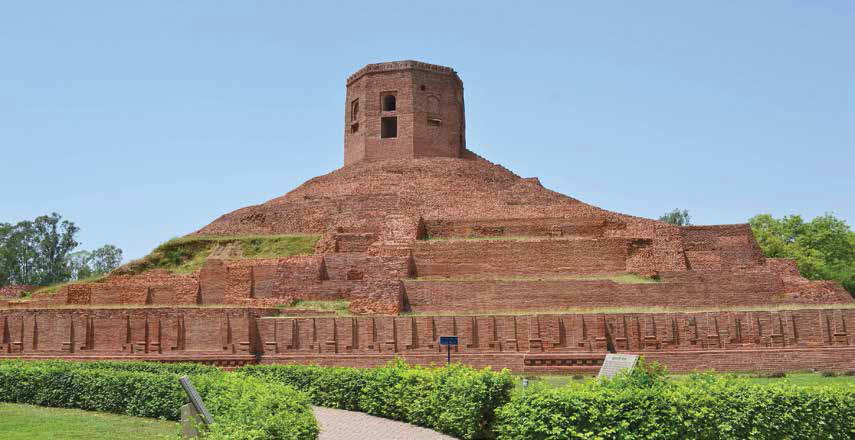
It was Emperor Ashoka, who resurrected this sacred Buddhist town, when he visited it and erected famous Ashoka Pillar. The four lion-heads on top of the pillar, facing four different directions and called the Lion Capital.
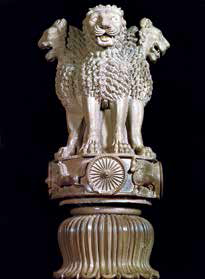
Ashoka also constructed the biggest and most striking stupa, the Dhamek Stupa here.
There is also the Dharmarajika Stupa, which is one of the few pre-Ashokan stupas in existence.
Among the other interesting sights in Sarnath, is the Mulgandhakuti Vihara, where the Buddha meditated,
whenever he visited Sarnath, during the monsoons.
Kushinagar – the location where the Buddha attained parinirvana
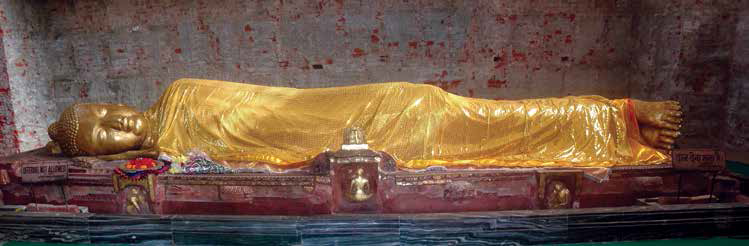
Kushinagar, at Gorakhpur, in the state of Uttar Pradesh, is where the Buddha attained Mahaparinirvana, in 486 BC.
His mortal remains were collected in eight urns and distributed to various stupas in the country.
The Mahaparinirvana Temple is the most important monument here.
The Chinese travellers Fa Hien and Hiuen Tsang visited Kushinagar during different centuries.
One also sees the Hiranyavati river.
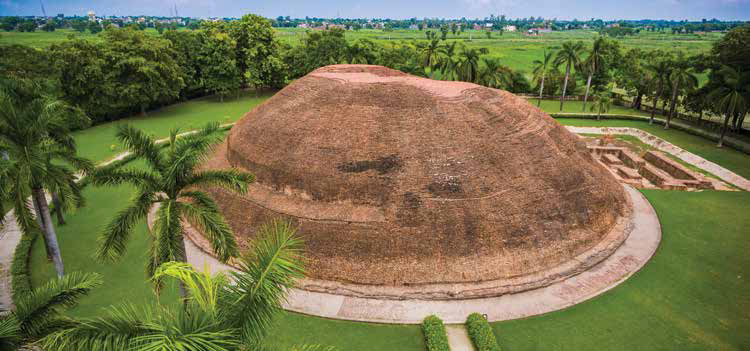
The Ramabhar Stupa is a large brick mound. This is where the Buddha was cremated.
External link: https://whc.unesco.org/en/list/666/
