
“The Extremists of to-day will be Moderates tomorrow, just as the Moderates of to-day were the Extremists of yesterday.”
Bal Gangadhar Tilak, 2 January 1907
Both the moderates and the extremists came from the middle class, both were reacting towards British rule, and both voiced Indian grievances. However, there were many differences between the moderates and the extremists which were not confined to different methods of agitation, but were fundamental differences in aim and methods.
Also it was the failure of the moderates to gain reforms by persuasion which resulted in the extremists determination to force the Government to yield power by coercion.
The major differences between moderates and extremists are:
֍ The social base of the moderates were zamindars and upper middle classes in towns. Whereas, the social base of extremists were educated middle and lower middle classes in towns.
֍ The moderates got ideological inspiration from western liberal thought and European history. On the other hand the extremists got ideological inspiration from Indian history, cultural heritage, and Hindu traditional symbols.
֍ The moderates believed in England’s providential mission in India. Whereas the extremists rejected the ‘providential mission theory’ as an illusion.
֍ The moderates believed political connections with Britain to be in India’s social, political, and cultural interests. On the other hand, the extremists, believed that political connections with Britain would perpetuate British exploitation of India.
֍ The moderates professed loyalty to the British Crown. Whereas, the extremists believed that the British Crown was unworthy of claiming Indian loyalty.
֍ The moderates believed that the movement should be limited to middle class intelligentsia; masses not yet ready for participation in political work. However, the extremists had immense faith in the capacity of masses to participate and to make sacrifices.
֍ The moderates demanded constitutional reforms and share for Indians in services. Whereas, the extremists demanded swaraj as the panacea for Indian ills.
֍ Moderates insisted on the use of constitutional methods only. The extremists on the other hand did not hesitate to use extra constitutional methods like boycott and passive resistance to achieve their objectives.
֍ The moderates were patriots and did not play the role of a comprador class. While the extremists were patriots who made sacrifices for the sake of the country.
Major Cause of Moderate-Extremist Split at Surat (1907)
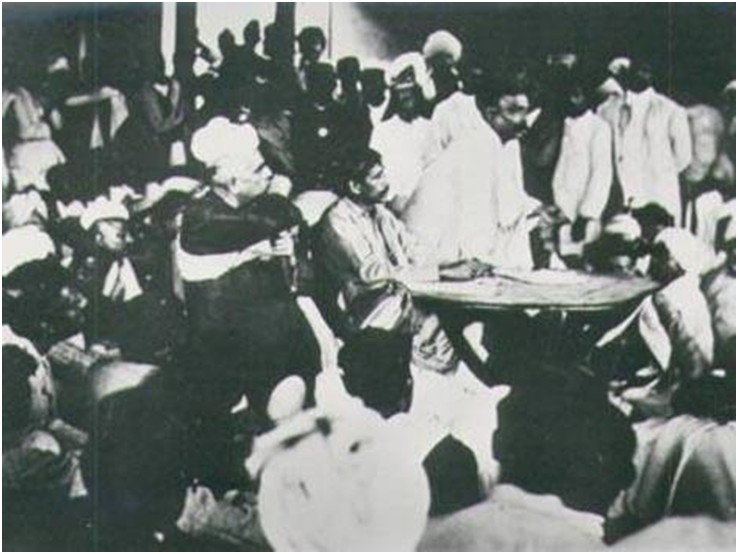
Moderates wanted to restrict the Boycott Movement to Bengal and to a boycott of foreign cloth and liquor.
Extremists wanted to take the movement to all parts of the country and include within its ambit all forms of association with the government through a boycott of schools, colleges, law courts, legislative councils, government service, municipalities, etc.
Must read: Why Militant Nationalism (1905–1909) Grew in India?
External link: https://egyankosh.ac.in/bitstream/123456789/89548/3/Unit-5.pdf
