
Hitler’s astounding success and the fall of Belgium, Holland, and France put England in a conciliatory mood. As the war in Europe had undertaken a new turn, the dominant Congress leadership was again in a dilemma.
Both Gandhi and Nehru strongly opposed the idea of taking advantage of Britain’s position. The Congress was ready to compromise, asking the British government to let it form an interim government during the war period but the government was not interested.
Must read: How British imperial power complicated the process of transfer of power during the 1940s?
What were the proposals under August Offer?
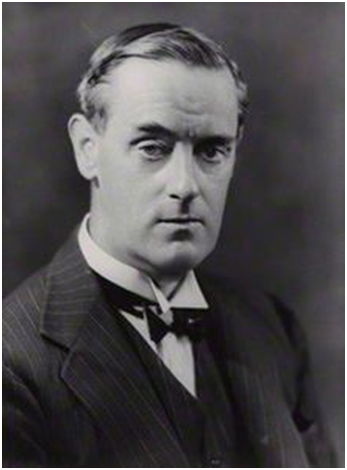
The government came up with its own offer to get the cooperation of India in the war effort. Linlithgow announced the August Offer (August 1940) which proposed:
● dominion status as the objective for India;
● expansion of viceroy’s executive council which would have a majority of Indians (who would be drawn from major political parties);
● setting up of a constituent assembly after the war where mainly Indians would decide the constitution
according to their social, economic, and political conceptions, subject to fulfilment of the obligation of the government regarding defence, minority rights, treaties with States, all India services; and
● no future constitution to be adopted without the consent of minorities.
Must read: Cripps Mission
What were the different responses to August Offer?
The Congress rejected the August Offer.
Nehru said, “Dominion status concept is dead as a doornail.”
Gandhi said that the declaration had widened the gulf between the nationalists and the British rulers.
The Muslim League welcomed the veto assurance given to the League, and reiterated its position that partition was the only solution to the deadlock.
Evaluation of August Offer
For the first time, the inherent right of Indians to frame their constitution was recognised and the Congress demand for a constituent assembly was conceded.
Dominion status was explicitly offered.
In July 1941, the viceroy’s executive council was enlarged to give the Indians a majority of 8 out of 12 for
the first time, but the British remained in charge of defence, finance, and home.
Also, a National Defence Council was set up with purely advisory functions.
External link: https://en.wikipedia.org/wiki/August_Offer#:~:text=On%208%20August%201940%2C%20early,to%20minority%20opinion%2C%20and%20the
