
By the second millennium B.C. several regional cultures sprang up in different parts of the Indian subcontinent. These were non-urban, non-Harappan and were characterized by the use of stone and copper topols. These cultures were termed as Chalcolithic cultures.
Religion was an aspect which interlinked all the Chalcolithic cultures.
Must read: Chalcolithic Culture : Regions and Features
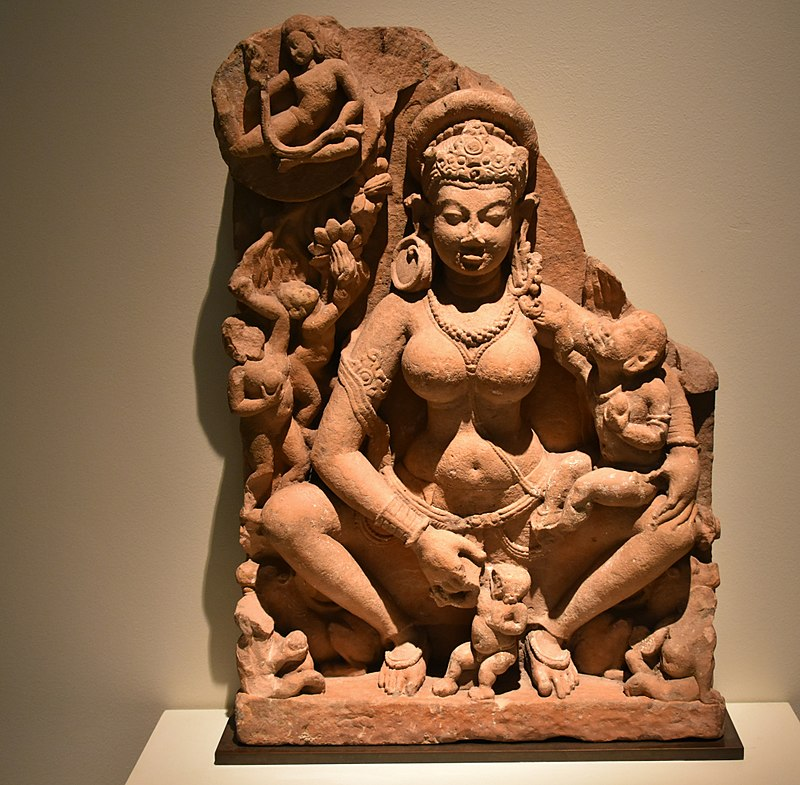
The worship of mother goddess and the bull was in vogue in the Chalcolithic cultures.
The bull cult seems to have been predominant in Malwa during the Ahar period. A large number of these both naturalistic as well as stylised lingas have been found from most of the sites. The naturalistic ones may have served as votive offerings, but the small stylised ones may have been hung around the neck as the Lingayats do today.
The Mother Goddess is depicted on a huge storage jar of Malwa culture in an applique design. She is flanked by a woman on the right and a crocodile on the left, by the side of which is represented the shrine.
Likewise the fiddle-shaped figurines probably resembling srivatsa, the symbol of Lakshmi, the Goddess of wealth in historical period represent a mother Goddess.
Must read: Agriculture, Trade and Commerce in Chalcolithic Cultures
In a painted design on a pot, a deity is shown with dishevelled hair, recalling the Rudra of later period.
A painting on a jar found from Daimabad; shows a deity surrounded by animals and birds such as tigers and peacocks. Some scholars compare it with the ‘Siva Pashupati’ depicted on a seal from Mohanjodaro.
Two figurines from Inamgaon, belonging to late Jorwe culture, have been identified as proto-Ganesh, who is worshipped for success before embarking on an undertaking.
Several headless figurines found at Inamgaon have been compared with Goddess Visira of the Mahabharata.
Fire worship seems to have been a very widespread phenomenon among the Chalcolithic people. Fire-altars have been found from a large number of Chalcolithic sites during the course of excavations.
The occurence of pots and other funerary objects found along with the burials of the Malwa and Jorwe people indicate that people had a belief in life after death.
For more information: External link: https://egyankosh.ac.in/bitstream/123456789/41362/1/Unit-3.pdf
